Actualités locales
China-Africa Partnership Conference contributes wisdom to global governance reform


JOHANNESBURG, Nov. 14 (Xinhua) — The Global South Media and Think Tank Forum China-Africa Partnership Conference concluded here on Friday, with participants reaching consensus on enhancing cooperation and elevating the Global South’s voice in international governance.
Participants engaged in in-depth discussions on how the West has long dominated the global governance system, overlooking the Global South’s interests and concerns in agenda-setting, rule-making and resource allocation — a pattern that urgently needs to change amid the collective rise of the Global South.
South Africa’s Independent Media Executive Chairman Iqbal Surve told Xinhua that the call by Global South countries to claim their rightful place in international narratives should not be ignored, noting that this forum, which brings together senior government, media and academic representatives from across Africa and China, demonstrates the Global South’s growing cohesion and voice.
Didier Kebongo, publisher of the Democratic Republic of the Congo’s Forum des As newspaper, said the forum has provided a platform for Global South countries to « build trust and discuss cooperation, » sending a strong signal on the eve of the G20 Leaders’ Summit that the Global South is calling for a fairer and more equitable global governance system.
He noted that Western media have long dominated agenda-setting, causing a structural imbalance in the current global governance system. « The forum sets to encourage the Global South to tell its own stories, jointly set agendas, share content and build common standards, » said Kebongo.
The two-day event gathered more than 200 representatives from over 160 media outlets, think tanks, government organizations and other institutions from China and 41 African countries, as well as the African Union (AU).
In addition to launching the « United in Heart, Path and Action — 2026 China-Africa Partnership Empowerment Action Plan, » the forum also published a think tank report titled « Jointly Building a New Model of Global Leadership — Work Together in Pursuit of a More Just and Rational Global Governance System. »
Participants voiced strong support for the report’s call to build a « new model of global leadership » and urged media and think tanks to strengthen bilateral cooperation and coordination under multilateral mechanisms to help lead the Global South’s narrative.
« The Global South must not speak in fragments. Our strength lies in unity, » said Leslie Richer, director of information and communication at the AU, stressing that the priority is to align efforts into a unified strategic voice that shapes global decision-making rather than merely reacting to it.
Erastus Mwencha, member of the Advisory Council of the Belt and Road Forum for International Cooperation and former deputy chairperson of the AU Commission, said the success of mechanisms such as the Global South Media and Think Tank Forum, the World Media Summit, and the BRICS Media Think Tank Forum reflects a broader shift toward the Global South in global development priorities.
Global South countries have the capacity to bring about change and development that is sustainable, he added.
Over the past two days, participants also held discussions on such topics as China-Africa commitments to global governance reform, China-Africa action for Global South revitalization, and China-Africa exchanges in global civilizational coexistence. They also attend a series of side activities, including a cultural exchange event between China’s Hunan Province and its African partners.
Liu Hongwu, director of the Institute of African Studies at China’s Zhejiang Normal University, said that the rise of the Global South signals the emergence of a more balanced, diverse and inclusive governance model, and that China-Africa cooperation offers a good example for global governance.
China-Africa cooperation is not one-way aid but a partnership built on equality, mutual support and win-win outcomes, demonstrating that global affairs « should be governed collectively by all countries, rather than led by a few, » said Liu.
Najeh Missaoui, chairman and chief executive officer of the Tunis Africa News Agency, said he hoped that practical cooperation in news reporting and information exchange under both bilateral and multilateral mechanisms would be strengthened.
« The holding of this forum is a clear affirmation of China’s commitment to strengthening South-South cooperation and supporting the causes of development and lasting peace on the basis of mutual respect and shared interests, » he said.
Participants also expressed their hope that the consensus reached during the event could be translated into tangible cooperation outcomes, calling for stronger collaboration in areas such as clean energy transition, industrial connectivity, talent development and co-creation and joint dissemination of content, which would help promote a more just and equitable global governance.
« Increasingly, African and Chinese entrepreneurs are co-creating solutions in renewable energy, e-commerce and digital technology, showing how shared progress can emerge from shared learning, » said Fikresus Amahazion, research analyst at Eritrean Center for Strategic Studies. « Across our continents, these exchanges are thriving, » the analyst said.
Confidence Musariri, chief commercial officer of the Namibia Press Agency, believed that as the Global South’s contribution to the world economy continues to grow, media and think tanks should step up collaboration to strengthen their collective voice, deepening cooperation in news sharing, training and new-media applications.
« Media cooperation must advance rapidly to avoid becoming an ‘endangered species’ in the era of artificial intelligence (AI), » he said, urging media colleagues to « leverage technologies like AI and big data to enhance digitalization and distribution efficiency. »
Drummond Mafuta, president of the Board of Directors of Angola’s Edicoes Novembro, said that this forum provides an important platform for media organizations to engage and for countries to more proactively tell their own stories.
« This forum is a meeting place, a space for consultation among all of us, where new ideas may emerge and cooperation agreements between our institutions may also be formed, » Mafuta said. ■
CLIQUEZ ICI POUR LIRE L’ARTICLE ORIGINAL SUR camerounactuel.com


Dans un éditorial consacré à l’histoire et à l’identité du Cameroun, Le Capitaine de vaisseau Serge Atonfack Guemo défend l’idée d’un peuple camerounais dont les racines socioculturelles seraient antérieures à la colonisation. Il met en garde contre les discours qui, selon lui, réduisent l’identité nationale aux héritages linguistiques et aux découpages historiques issus de la période coloniale et postcoloniale.
Atonfack Guemo prend position dans le débat sur les origines et la construction de l’identité nationale camerounaise. Dans un texte intitulé « Le Cameroun : peuple d’origine, d’implantation et de mœurs immémoriales, réalité socio-tribale bien antérieure à 1650, à 1961 et à 1972 », il appelle à reconnaître l’ancienneté des communautés et des traditions qui composent le pays.
Le chef de la Division de la Communication au ministère délégué à la présidence de la République chargé de la Défense conteste les approches qui situent la naissance du Cameroun à des dates historiques précises, notamment janvier 1960, octobre 1961 ou encore la conférence de Foumban d’avril-mai 1972. Selon lui, ces repères ne sauraient résumer l’histoire des populations qui occupaient déjà le territoire avant l’arrivée des puissances étrangères.
Dans son argumentaire, Atonfack Guemo estime que les communautés camerounaises disposaient bien avant la colonisation de leurs propres espaces de peuplement, de leurs coutumes et de leurs formes de relations sociales. Il évoque notamment les liens de voisinage, les parentés et les similitudes entre les pratiques culturelles des différentes communautés.
Lire l’éditorial de Cyril Atonfack Guemo :
Le Cameroun : peuple d’origine, d’implantation et de mœurs immémoriales, réalité socio-tribale bien antérieure à 1960, à 1961 et à 1972
Une acception communément admise présente le fondamentalisme comme étant l’ensemble des radicalités qui défendent une conception rigoriste de la religion ou de la politique, au risque d’une confrontation avec la société environnante. Le fondamentalisme renvoie ainsi à une espèce de comparaison entre un état originel et ses évolutions. Ce qui peut donner de la matière pour une discussion constructive et mutuellement enrichissante, du moins pour des personnes bien intentionnées. Sinon de prêter à polémique, le fondamentalisme devient très vite polémologique, lorsqu’il se nourrit d’intransigeance, d’affabulations et de fausses allégations.
Ainsi en est-il du fait, pour certains, d’élever des techniques administratives apprises pendant l’occupation étrangère, en éléments culturels jouissant d’une légitimité égale à celle des fondements de l’écologie sociologique héritée de nos ancêtres. Il en va de même du travestissement d’autres pans de l’histoire de notre pays, qui consiste à faire croire que cette histoire ne commencerait qu’en janvier 1960 pour les uns, en octobre 1961 pour d’autres, ou après la conférence de Foumban d’avril-mai 1972 pour une autre mouvance. Autant d’aliénantes manipulations cognitives, autant d’enivrantes élégies qui engendrent le clivage, l’ostracisme, le déracinement et, au final, la violence.
Ces discours, tout ce qu’il y a de plus inepte, finissent par transformer de paisibles jeunes gens nourrissant des rêves d’un avenir radieux au sein de la cité Cameroun en de furieux désespérés animés d’une haine viscérale de leur propre pays, car se prenant pour les descendants de chimériques héros d’autrefois, intrépides défenseurs de royaumes qui n’ont pourtant jamais existé sous nos cieux.
Mais d’une manière qui ne serait autre que délibérée, tout semble mis en œuvre pour occulter, déformer, contrefaire l’irréfragable réalité selon laquelle nos divers sites de peuplement tribaux sont antérieurs à l’arrivée du colonisateur. Nos voisinages et consanguinités, nos divers us et coutumes ancestraux, qui entre eux partagent de très nombreux points de similarité, ont depuis toujours constitué des facteurs de fraternel rapprochement, voire d’inextricable intrication entre nos tribus.
Le peuple camerounais ne saurait donc être réduit à une addition, une juxtaposition, et encore moins à une superposition de tribalités sui generis, seulement liées par une communauté de langues étrangères d’un usage purement transactionnel. Le peuple camerounais est d’origine, d’implantation et de mœurs immémoriaux. L’occupation étrangère n’y aura d’ailleurs rien changé, contrairement aux malsaines intentions opportunistes qui veulent regrouper les Camerounais en fonction des langues apportées de l’extérieur, ou en rapport avec les points cardinaux. Pareille catégorisation est une source additionnelle de tracas dont on devrait résolument se passer.
Car ce qui importe avant et après tout, ce n’est ni la fidélité proclamée à tel ou tel idiome d’outre-mer, ni la tapageuse démonstration du désir de mimétisme avec tel ou tel peuple étranger. Ce qui importe avant et après tout, c’est la volonté des Camerounais de faire de cette binarité linguistique d’opportunité un précieux instrument devant servir au rapatriement des savoirs techniques et technologiques, un important atout d’attraction et de facilitation dans le contact avec d’autres peuplades de la scène planétaire. Tout en préservant, tout en pérennisant et tout en promouvant l’être et l’artefact qui fondent à la fois l’originalité et la singularité de notre personnalité. Vous parlez d’un fondamentalisme inclusif ?
Sachons rester vigilants,
Sachons rester patriotes,
Sachons aimer définitivement le Cameroun.
CLIQUEZ ICI POUR LIRE L’ARTICLE ORIGINAL SUR camerounactuel.com
Actualités locales
Simon Ngapandouetnbu en état de grâce : neuf arrêts et un nouveau clean sheet avec Montpellier !

Simon Ngapandouetnbu a été l’un des grands artisans de la victoire de Montpellier face à Annecy (3-0), lors de la 11e journée de Ligue 2. […]
Rejoindre notre chaîne télégram pour avoir les dernières infos
Cliquez ici
Actualités locales
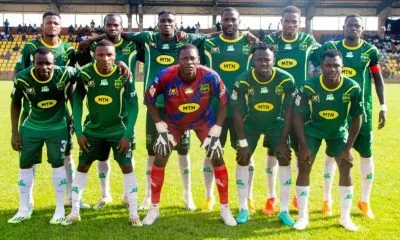
« On donnera tout » : Yvana Yakana Makana mobilise les supporters avant le grand rendez-vous face au FUS Rabat
Lekié FF à l’assaut de l’Afrique, Yvana Yakana Makana lance un appel fort aux supporters avant le choc face au FUS Rabat. Le compte à […]
Rejoindre notre chaîne télégram pour avoir les dernières infos
Cliquez ici
 Société2 years ago
Présidentielle 2025 au Cameroun: voici les 10 candidats qui ont déjà déclaré leurs candidatures
- Dernières actualités2 years ago
Cameroun : Liste complète des 250 ethnies qui font la fierté de la nation
- Politique2 years ago
Présidentielle 2025 : voici les 10 candidats qui ont déjà déclaré leurs candidatures
- Politique2 years ago
Élections présidentielles 2025 au Cameroun : Quels candidats ont les meilleures chances de succès ?
- Sports2 years ago
A. Song ⁚ >
- Actualités locales8 months ago
Théodore Datouo élu président de l’Assemblée nationale du Cameroun !
- Sports2 years ago
Cameroun ⁚ les clubs déjà sous pression
- Société2 years ago
Obtenez votre CNI en 48 heures : voici les 13 centres d’enrôlement au Cameroun