
Actualités locales
(China Economic Roundtable) Xinhua Headlines: China stimulates domestic demand to strengthen economic upturn

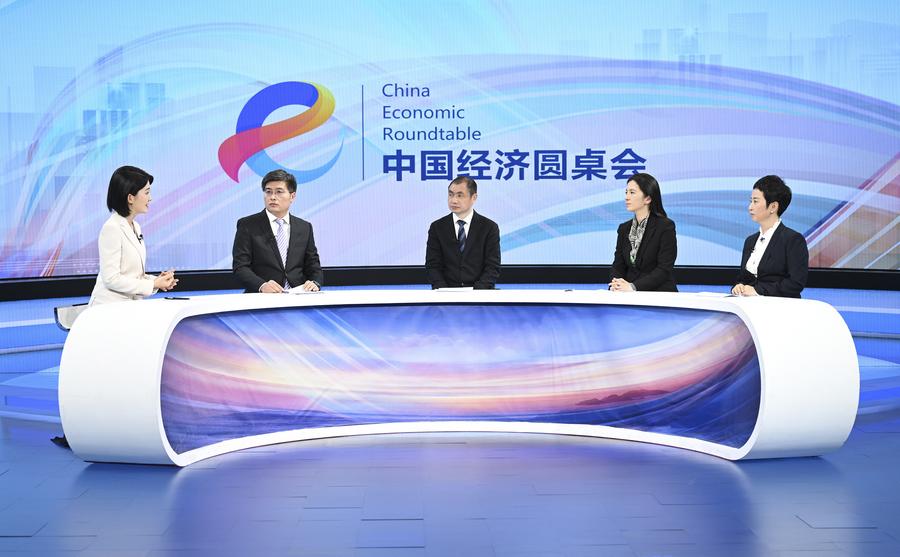
* As China navigates a complex global economic landscape, it seeks to stimulate domestic demand to tackle both immediate and long-term challenges.
* Thanks to the government’s supportive measures, signs of improvement in domestic demand are beginning to emerge.
* China’s significant potential to boost consumption and investment, combined with the gradual impact of pro-growth measures, is expected to drive economic growth forward.
BEIJING, Dec. 9 (Xinhua) — As China navigates a complex global economic landscape, it seeks to stimulate domestic demand to tackle both immediate and long-term challenges.
China’s policy for invigorating consumer spending and investment has produced results, according to guest speakers who joined the ninth episode of the China Economic Roundtable hosted by Xinhua News Agency, which was broadcast on Monday.
GATHERING STEAM
China has stepped up efforts, combining immediate policy measures with structural reforms, to stimulate domestic demand.
Thanks to these measures, including promoting equipment upgrades and consumer goods trade-ins, stabilizing the property market, and addressing local government debt risks, signs of improvement in domestic demand are beginning to emerge.
Retail sales of consumer goods, a main gauge of consumption, rose 4.8 percent year on year in October, quickening from the 3.2 percent increase in September, according to the National Bureau of Statistics (NBS).
Driven by the trade-in program, which offers consumers subsidies on the replacement of a wide range of products, household appliances and audio-visual equipment reported a 39.2 percent surge in combined sales in October compared to a year earlier.
Growth of the country’s fixed-asset investment had remained stable for two consecutive months, posting an annual increase of 3.4 percent in the Jan-Oct period.
Backed by stable economic recovery and a revitalized tourism industry, the country’s railway network handled a record of over 4 billion passenger trips in the first 11 months of the year, surpassing the 3.86 billion trips recorded for the entire year of 2023.
Zhao Chengfeng, an official of the National Development and Reform Commission, said the country has allocated about 6 trillion yuan (about 834.84 billion U.S. dollars) in government investment funds so far this year. These funds have supported the implementation of major national strategies and the building up of security capacity in key areas, facilitated post-disaster recovery and reconstruction, strengthened disaster prevention and relief efforts, and backed projects to improve livelihoods, boost employment and spur consumption.
« These projects are expected to play an important role in driving this year’s economic growth and fulfilling the full-year economic and social development targets, » Zhao said.
China’s GDP grew 4.8 percent year on year in the first three quarters of 2024. The country set a target for economic growth of around 5 percent for this year.
GROWING PAIN
The lack of effective demand in China stems from both cyclical and structural factors, which analysts view as challenges emerging from the development process.
« It’s a growing pain that China must go through during the process of its economic structure transformation and upgrading, and the transition from old to new growth drivers, » said Chen Lifen, a researcher at the Development Research Center of China’s State Council, a government think tank.
Chen said the adjustments in China’s property market led to a reduction in investment demand, while increasing uncertainties in the world’s economic development dampened external demand, eroding the momentum of domestic demand growth.
China’s property market saw 1.8 billion square meters of commercial residential housing sold in 2021, but the figure fell to 1.12 billion square meters in 2023, according to the NBS data.

According to Nobel laureate economist Michael Spence, China has reached the stage of development where domestic, not external, demand should account for the bulk of aggregate demand.
« The transition from an export- and investment-led growth model to one based on domestic consumption and innovation amounts to a fundamental structural transformation, » he wrote in a signed article recently.
Yet there is much room for optimism. The economist noted that « the challenges China faces are daunting, but not insurmountable. With a clear and well-targeted policy approach, growth momentum can be restored within two to three years. »
« We should maintain confidence in China’s economic growth, » Chen added, noting that as the domestic demand-boosting policies take effect, they are set to bolster market confidence, encourage business investment, and strengthen the momentum of economic expansion.
SOURCE OF GROWTH
Domestic consumption is « the reliable source of growth » for China’s economy, the International Monetary Fund (IMF) Managing Director Kristalina Georgieva said at a press conference in response to a question from Xinhua.
« Taking the sectors of the economy that are somewhat less developed from a consumer standpoint, like healthcare, education, elderly care, making services more of a driver for growth, that would help, » she added. « I’m sure the leadership in China is looking into these choices. »
The IMF has warned that the global economy is in danger of « getting stuck on a low-growth high-debt path, » urging policymakers to act on debt and carry out pro-growth reforms.
Placing China in a global context is helpful. According to McKinsey’s ConsumerWise survey of consumers, Chinese consumers are among the most confident in the world. The latest August round of survey results showed 59 percent of Chinese consumers said the economy would rebound within the next two to three months, compared with just 41 percent of American consumers, 30 percent of British consumers, and 13 percent of Japanese consumers.
Speaking about China’s consumption growth prospect, Yang Nie, an official of the Ministry of Commerce, expressed a highly optimistic outlook. He noted that the country has a vast market of more than 1.4 billion people, 190 million business entities, a complete industrial system and various consumption scenarios that are thriving.

Yang said that as Chinese people’s living standards have continued to rise, consumers now focus more on services, consumption experience, as well as green and low-carbon products, generating new demand and opportunities for consumption.
As the country strives to promote technological innovation and industrial upgrading, and to improve infrastructure and public services to realize people’s aspirations for a better life, there is significant potential to boost investment growth, Zhao said.
He highlighted several sectors that require increased investment, including green energy, new infrastructure, water conservation projects, emerging industries, future-oriented sectors, and areas related to people’s livelihoods. ■

Xinhua communément appelée « agence Chine nouvelle », prononcer est la plus grande et la plus ancienne des deux agences de presse nationales chinoises.
CLIQUEZ ICI POUR LIRE L’ARTICLE ORIGINAL SUR camerounactuel.com


Écarté des plans des précédents entraîneurs de Manchester United, André Onana pourrait avoir une nouvelle chance à Old Trafford. L’arrivée annoncée de Mauricio Pochettino sur […]
Rejoindre notre chaîne télégram pour avoir les dernières infos
Cliquez ici

À Sangmélima, dans la région du Sud, la situation autour des primaires du Rassemblement démocratique du peuple camerounais (RDPC) continue de susciter des réactions. Après la victoire de Dill Onel Baté Essiane, crédité de 141 voix contre six face à son adversaire, puis l’annonce de son retrait, Bruno François Bidjang dénonce une situation qu’il juge préjudiciable à la promotion de la jeunesse au sein du parti au pouvoir.
La controverse autour des investitures du RDPC pour les prochaines élections législatives et municipales prend une nouvelle dimension à Sangmélima. Dans une prise de position publiée sur les réseaux sociaux, Bruno François Bidjang s’est inquiété du sort réservé à Dill Onel Baté Essiane, présenté comme le vainqueur des primaires organisées dans cette circonscription politique.
Selon les chiffres avancés dans cette déclaration, le jeune candidat aurait obtenu 141 voix contre six pour son concurrent. Un résultat que Bruno François Bidjang considère comme une victoire sans ambiguïté, exprimant le choix des militants ayant pris part au scrutin interne.
Mais cette victoire aurait été suivie de difficultés dans le processus d’investiture. Le journaliste Bruno Bidjang évoque des problèmes rencontrés par le dossier du candidat au niveau départemental, ainsi que des pressions et des intimidations qui auraient été dénoncées auprès des commissions chargées des investitures.
Lire la réaction de Bruno Bidjang :
« SANGMÉLIMA : ON NE PEUT PAS DONNER DE L’ESPOIR À LA JEUNESSE ET LE LUI RETIRER AU LENDEMAIN D’UNE VICTOIRE !
Ce qui se passe actuellement à Sangmélima autour de la victoire du jeune Dill Onel Baté Essiane aux primaires du RDPC est profondément regrettable. C’est une situation qui interpelle notre conscience collective et qui, malheureusement, donne une image peu reluisante de notre arrondissement, de notre département et de notre manière de faire la politique.
141 voix contre 6 ! Ce n’est pas une victoire arrachée de justesse. C’est un résultat sans appel, l’expression d’un choix clairement manifesté par les militants appelés à départager les candidats.
Ce jeune a osé, il a travaillé, il a mobilisé pendant des années, il a suscité un engouement remarquable et, surtout, il a redonné à toute une génération l’espoir qu’au sein du RDPC, le mérite, le travail de terrain et l’adhésion des militants pouvaient encore permettre de bousculer les habitudes.
Et voilà qu’après cette victoire, nous apprenons que son dossier aurait rencontré des difficultés au niveau départemental, avant que des pressions et des intimidations ne soient dénoncées au niveau des commissions chargées des investitures. Aujourd’hui, le jeune homme annonce son retrait. Comment en est-on arrivé là ? Il faut que les responsables politiques chargés de conduire ce processus se ressaisissent.
Personne ne pouvait ignorer, en organisant ces primaires, qu’un jeune pouvait battre un responsable installé depuis plusieurs années. C’est précisément le sens d’une élection. On ne peut pas accepter les règles du jeu avant le scrutin et chercher à en modifier les conséquences lorsque le résultat ne correspond pas aux attentes de certains.
À quoi sert-il de faire voter les militants si leur choix doit ensuite être vidé de sa substance ? Quel message envoyons-nous aux milliers de jeunes qui militent, travaillent et espèrent légitimement accéder un jour aux responsabilités ?
Le président national du RDPC, Son Excellence Paul Biya, a placé son nouveau septennat sous le signe des jeunes et des femmes. Cette orientation doit pouvoir se traduire dans les faits. La jeunesse ne peut pas être bonne uniquement pour les défilés, les mobilisations et les applaudissements, puis devenir gênante lorsqu’elle aspire à exercer des responsabilités.
Je suis particulièrement préoccupé par la tournure que prend cette affaire. La déferlante de réactions sur les réseaux sociaux expose inutilement Sangmélima, le Dja-et-Lobo et ses Responsables Politiques à une polémique dont nous aurions pu faire l’économie. Notre département mérite mieux que cette image.
Il ne s’agit pas de manquer de respect aux aînés, encore moins de contester leur expérience ou leur contribution au parti. Il s’agit simplement de comprendre qu’aucune responsabilité politique ne devrait être considérée comme une propriété privée et qu’aucune génération ne devrait se sentir condamnée à attendre indéfiniment son tour.
Les instances dirigeantes du RDPC doivent se saisir de ce dossier avec toute la responsabilité et la sérénité nécessaires. Les résultats du vote, les procès-verbaux et les décisions des différentes commissions doivent être examinés avec transparence. Les accusations d’intimidation méritent également des éclaircissements. Si les résultats annoncés sont conformes aux règles du parti, ils doivent être respectés.
Le cas Baté Essiane dépasse désormais sa seule personne. Il pose une question fondamentale : quelle place voulons-nous réellement accorder à la jeunesse dans la gestion des affaires publiques ? Nous ne pouvons pas encourager les jeunes à s’engager en politique et, lorsqu’ils remportent démocratiquement une compétition interne, leur donner le sentiment que leur victoire ne compte pas.
Il est encore temps de trouver une issue juste et honorable à cette situation, dans le respect des textes du parti, du choix des militants et de la dignité de toutes les parties. Sangmélima ne doit pas devenir le symbole d’une jeunesse à laquelle on demande de croire en ses chances, mais à laquelle on refuse de reconnaître ses victoires.
Bruno François Bidjang »
CLIQUEZ ICI POUR LIRE L’ARTICLE ORIGINAL SUR camerounactuel.com
Le Cameroun perd environ 162,8 milliards de FCFA par an à cause des flux financiers illicites et de la sous-évaluation des exportations de bois. Dans […]
Rejoindre notre chaîne télégram pour avoir les dernières infos
Cliquez ici
 Société2 years ago
Présidentielle 2025 au Cameroun: voici les 10 candidats qui ont déjà déclaré leurs candidatures
- Dernières actualités2 years ago
Cameroun : Liste complète des 250 ethnies qui font la fierté de la nation
- Politique2 years ago
Présidentielle 2025 : voici les 10 candidats qui ont déjà déclaré leurs candidatures
- Sports2 years ago
A. Song ⁚ >
- Politique2 years ago
Élections présidentielles 2025 au Cameroun : Quels candidats ont les meilleures chances de succès ?
- Actualités locales8 months ago
Théodore Datouo élu président de l’Assemblée nationale du Cameroun !
- Sports2 years ago
Cameroun ⁚ les clubs déjà sous pression
- Société2 years ago
Obtenez votre CNI en 48 heures : voici les 13 centres d’enrôlement au Cameroun